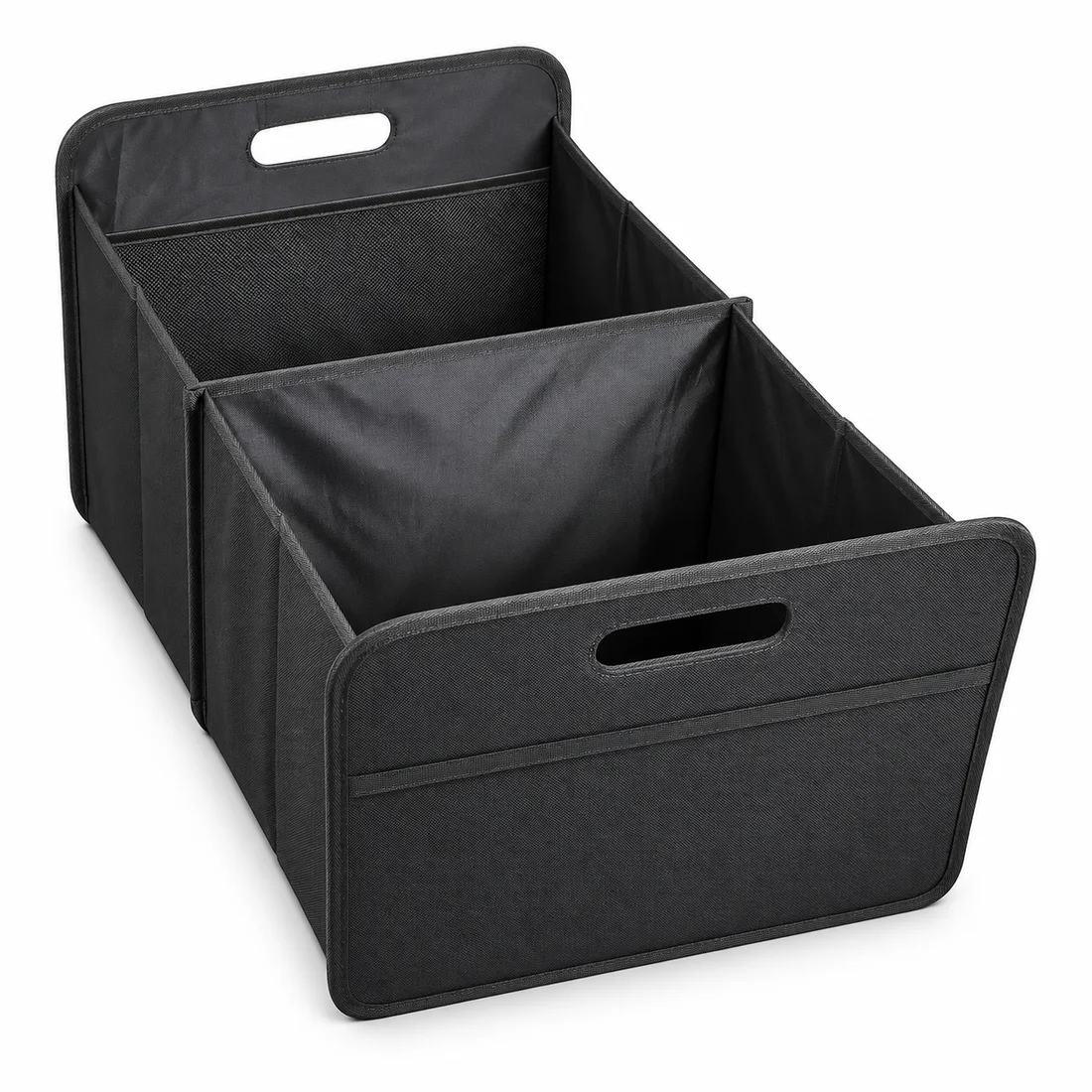
What this product does
A folding cargo organizer with divided storage for everyday vehicle gear. Confirm the open and folded dimensions for your assortment. The intended use is grouping gear in a vehicle cargo area and folding it away between trips. Use the information below to decide whether this product belongs in your assortment and what to confirm before you approve a bulk order.
| Item | Reference or check |
|---|---|
| Construction | Foldable, divided polyester organizer |
| Dimensions | Confirm against selected variant |
| Intended application | grouping gear in a vehicle cargo area and folding it away between trips |
| Measurements to provide | flat cargo floor width and depth, clearance under the cargo cover and the space available for the folded organizer |
| Sample checks | Inspect handle stitching, panel stiffness and the base. Check which partitions are fixed, whether any straps are supplied and whether loaded items remain accessible. |
| Evidence to request | a variant-specific dimension drawing, bill of materials, packing list and any applicable handle or panel test |
Where it fits and how to measure
Measure between wheel arches and behind the seat, rather than using the full interior width. A taller organizer can interfere with a cover, and a folded unit can still be too thick for an underfloor compartment. Record flat cargo floor width and depth, clearance under the cargo cover and the space available for the folded organizer. Include photos of the relevant area and identify the make, model, year and trim if known. Have the supplier compare the measurements with the specific configuration offered. A vehicle name alone may not identify the rail, seat or cargo layout.
How to use and evaluate a sample
Open the organizer on a level cargo floor. Check how its panels and dividers lock or sit in position on the sample. Place representative items inside and check access from the hatch. Verify whether the base or supplied attachments are suitable for the actual floor. Empty the organizer and follow the folding sequence to check its storage footprint. Document the steps you actually used and note any tools, clearance or preparation needed. If the physical sample differs from the drawing or the photos, resolve the difference before using those materials for a retail listing.
Problems buyers want to avoid
Drivers describe sliding on liners, tall boxes obstructing access and uncertain divider layouts. Test the bottom construction on both the surface you sell for and the sample configuration you plan to stock. The supplier materials list two different dimensions. Keep both as internal leads until a measured sample and a dated specification agree. A photo showing a vehicle liner or tie point does not establish that the organizer includes matching attachments.
What to verify before ordering
Inspect handle stitching, panel stiffness and the base. Check which partitions are fixed, whether any straps are supplied and whether loaded items remain accessible. Request a variant-specific dimension drawing, bill of materials, packing list and any applicable handle or panel test. Keep the sample identifier, the drawing revision and photos together. Record which conditions passed, which remain open and any change you requested. A written sample approval makes it easier to compare incoming stock with the version your team reviewed.
How to request a comparable wholesale quote
Send the requested product and variant, quantity by item, destination and packaging requirements. Ask for a unit price at that quantity, the minimum order for the configuration, sample cost and production lead time. Request units per carton, outer dimensions and gross weight, along with the stated delivery terms. Compare quotations for the same configuration and destination. If a quote changes the material, hardware or packing, ask for a revised specification before approving it. For a mixed order, confirm quantities and packing separately for each item.
Prepare the listing and repeat order
Use measurements and images for the approved sample. Label the product and carton with the identifier that appears on the quotation. Record the verified fit conditions, the items included in the package and the customer questions that the instructions should answer. Confirm any artwork and image permissions before sharing materials with a retailer. When reordering, reference the approved sample and ask whether the configuration, packaging or specifications have changed. This gives your receiving team a consistent set of details to check when the shipment arrives.
What to document for your purchasing team
Keep a short approval file with the supplier reference, photos of the exact sample, the measurements you checked and the packaging agreed for the order. Identify who approved any revised configuration and which points still require a reply. If you buy for several channels, record any differences in labeling or packaging per channel. This file helps the next buyer or receiving team distinguish a change in the product from a difference in how it was measured or packed.