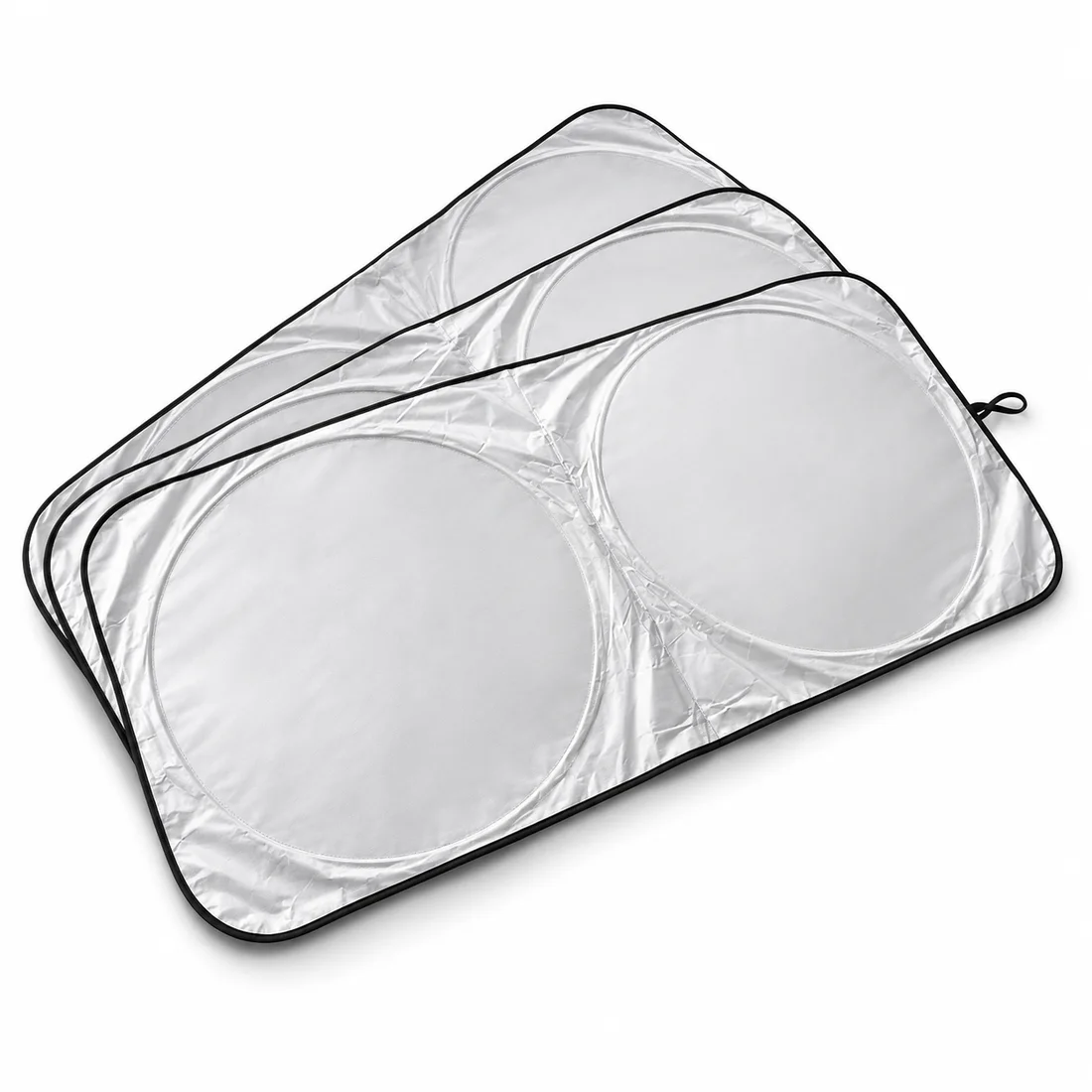
What this product does
A folding front windshield shade for parked vehicles. Send the windshield dimensions and branding requirements for sourcing. The intended use is covering the front glass while the vehicle is parked. Use the information below to decide whether this product belongs in your assortment and what to confirm before you approve a bulk order.
| Item | Reference or check |
|---|---|
| Style | Folding front windshield shade |
| Size and fabric | Confirm by variant |
| Intended application | covering the front glass while the vehicle is parked |
| Measurements to provide | usable windshield width and height plus the location of the mirror, camera housing and dash fixtures |
| Sample checks | Check the fabric layers, edge binding, fold action and folded footprint. Photograph the shade on the glass and in its storage location. Verify any pouch and printed area separately. |
| Evidence to request | the material breakdown, open and folded size, print proof and any model-specific UV or temperature test |
Where it fits and how to measure
Two windscreens with similar overall width can have different slopes and mirror locations. A shade can overlap the center or leave light gaps along the top while still fitting within the glass opening. Record usable windshield width and height plus the location of the mirror, camera housing and dash fixtures. Include photos of the relevant area and identify the make, model, year and trim if known. Have the supplier compare the measurements with the specific configuration offered. A vehicle name alone may not identify the rail, seat or cargo layout.
How to use and evaluate a sample
Park the vehicle and unfold the shade in a clear area. Follow the sample instructions for which side faces the glass and how it is held in place. Check the mirror and sensor area rather than forcing the frame into a corner. Remove and fold the shade before driving. Practice the folding sequence until the frame can be packed without twisting the edging. Document the steps you actually used and note any tools, clearance or preparation needed. If the physical sample differs from the drawing or the photos, resolve the difference before using those materials for a retail listing.
Problems buyers want to avoid
A shade that covers the glass well may still take too much space when folded. Users also report gaps near cameras or mirrors. Test the shape and storage routine on the same sample. A reflective surface alone does not establish a temperature reduction. Compare test setup, measurement time and the exact material construction before using a performance number. If stocking several sizes, approve separate packaging labels so a buyer can identify the correct size without opening the pack.
What to verify before ordering
Check the fabric layers, edge binding, fold action and folded footprint. Photograph the shade on the glass and in its storage location. Verify any pouch and printed area separately. Request the material breakdown, open and folded size, print proof and any model-specific UV or temperature test. Keep the sample identifier, the drawing revision and photos together. Record which conditions passed, which remain open and any change you requested. A written sample approval makes it easier to compare incoming stock with the version your team reviewed.
How to request a comparable wholesale quote
Send the requested product and variant, quantity by item, destination and packaging requirements. Ask for a unit price at that quantity, the minimum order for the configuration, sample cost and production lead time. Request units per carton, outer dimensions and gross weight, along with the stated delivery terms. Compare quotations for the same configuration and destination. If a quote changes the material, hardware or packing, ask for a revised specification before approving it. For a mixed order, confirm quantities and packing separately for each item.
Prepare the listing and repeat order
Use measurements and images for the approved sample. Label the product and carton with the identifier that appears on the quotation. Record the verified fit conditions, the items included in the package and the customer questions that the instructions should answer. Confirm any artwork and image permissions before sharing materials with a retailer. When reordering, reference the approved sample and ask whether the configuration, packaging or specifications have changed. This gives your receiving team a consistent set of details to check when the shipment arrives.
What to document for your purchasing team
Keep a short approval file with the supplier reference, photos of the exact sample, the measurements you checked and the packaging agreed for the order. Identify who approved any revised configuration and which points still require a reply. If you buy for several channels, record any differences in labeling or packaging per channel. This file helps the next buyer or receiving team distinguish a change in the product from a difference in how it was measured or packed.